
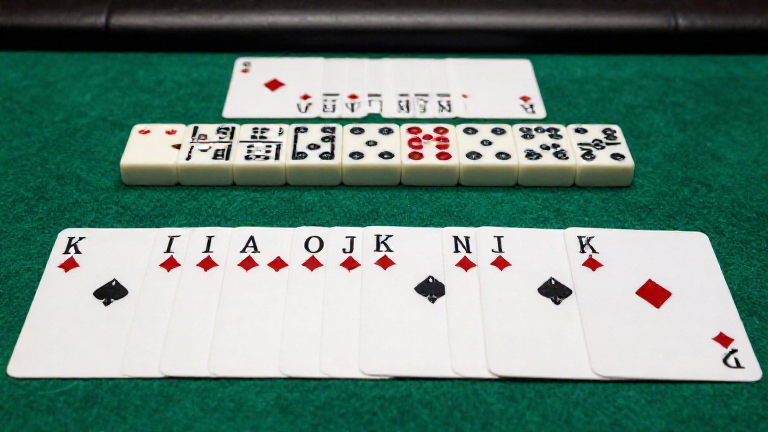
Stop making your Pai Gow front hand look pretty
The most common Pai Gow Poker mistake is overbuilding the 2-card hand. Here's how to spot the trap and split for total value instead.
Table of Contents
The quiet mistake that costs you pushes
I've played hundreds of Pai Gow Poker hands and the same error keeps showing up, both in my own play and at every table I watch. It's not a dramatic blunder. You look at your seven cards, see a decent pair or two Broadway cards, and think "that'll make a strong front hand." You move them up. Your back hand gets weaker. And now both hands are just okay instead of one being genuinely strong.
That instinct feels smart. It isn't.
Your back hand is the engine
Pai Gow Poker isn't two separate poker hands competing independently. Your 5-card back hand carries the structural weight of the split. When both hands beat the dealer's, you win. When only one does, it's a push. The back hand, being five cards with full poker rankings available, is where your real power lives.
The front hand? It can only be high card or one pair. That's it. No straights, no flushes. Its ceiling is capped by design. So every time you sacrifice back-hand strength to make the front look impressive, you're trading the hand with more potential for the hand with less.
I see players on Stake do this constantly in their poker rooms. They'll break a solid two-pair back hand to put the higher pair up front, turning two strong positions into two mediocre ones. The poker tables there move fast enough that you don't always catch yourself doing it.
How to actually read a seven-card deal
Here's the process I use now, and it took me a while to trust it because the right split often looks boring.
First, I find the best natural 5-card hand from my seven cards without even thinking about the front. What's the strongest back hand I can build? Full house? Flush? Two pair with a decent kicker? That's my starting point.
Then I look at what's left. The remaining two cards become my front hand by default. Only after that do I ask whether breaking the back hand genuinely improves my total position.
Most of the time, the answer is no. The back hand is already doing its job, and the two leftover cards are fine. A king-high front hand isn't exciting, but it doesn't need to be. It needs to beat the dealer's front hand, and the dealer is building from the same constraints you are.
The medium-pair trap
The spot where this gets tricky is when you have one medium pair, an ace, and a handful of side cards. Say you're dealt something like a pair of eights, an ace, a king, a ten, a six, and a three.
The temptation is to move the eights up front. A pair in front feels active, purposeful. But your back hand is now ace-king-ten-six-three, which is just high card. The dealer needs basically any pair in the back to beat you.
Keep the eights in back. Your back hand becomes a pair of eights with ace-king-ten kickers. Your front hand is king-ten or ace-king, depending on how you arrange it. The total structure is much stronger even though the front hand looks plain.
I resisted this for a long time. It felt like I was wasting the pair. But Pai Gow rewards the boring split far more often than the flashy one.
A one-beat pause that changes everything
When I sit down for a session, whether it's at a crypto casino or playing through casino games online, I force myself to slow down by exactly one beat before finalizing any split.
The pause works like this: identify the best 5-card hand first. Then check the leftover two cards. Only then ask, "does breaking the back actually help the whole arrangement?" Nine times out of ten, the answer is obvious once you frame it that way.
Without the pause, I default to making the front hand look good. With it, I default to preserving total value. That tiny difference compounds over dozens of hands.
What crypto Pai Gow players should know
If you're playing Pai Gow at a crypto casino, the math doesn't change. But the environment does. Online play moves faster, you don't have a dealer physically arranging cards, and there's no social pressure from other players watching your split. That speed can actually make the overbuilding problem worse because you're pattern-matching without pausing.
Some platforms offer house-way suggestions. I recommend setting your hand first and then checking the suggestion after. It builds your instinct faster than copying the house way every time. You can compare different platforms to find ones that offer this feature, as not all crypto poker rooms handle Pai Gow the same way.
Games like 20 Super Hot (95.79% RTP) have simple decisions. Pai Gow is the opposite. Every hand is a small puzzle, and the right answer usually feels underwhelming. That's how you know you're doing it correctly.
The pattern behind good splits
After enough hands, you start to notice something. Good splits feel orderly. Balanced. Slightly boring. The back hand is solid, the front hand is adequate, and neither is fighting the other for resources.
Bad splits feel creative. They look like you outsmarted the deal. And then the dealer flips over a routine hand that beats both of yours because you hollowed out your back to make the front shine.
Pai Gow is a game that rewards restraint. If your split feels like a tough, interesting decision, it probably is one. If it feels obvious and a little dull, you're probably right.

Crypto Gaming DB editorial contributor.
Continue Reading
I've been on tilt more times than I'll admit, here's what actually helps
Practical mental strategies for handling losing streaks in crypto poker and casino games, from bankroll rules to emotional pattern recognition.
Your bankroll management is probably wrong, and it's costing you sessions
Practical crypto casino bankroll management strategies that keep your play sustainable and your budget intact.
Genius Sports vs LSports: what crypto sportsbooks should actually care about
A practical comparison of Genius Sports and LSports data APIs for operators building crypto sports betting platforms.