
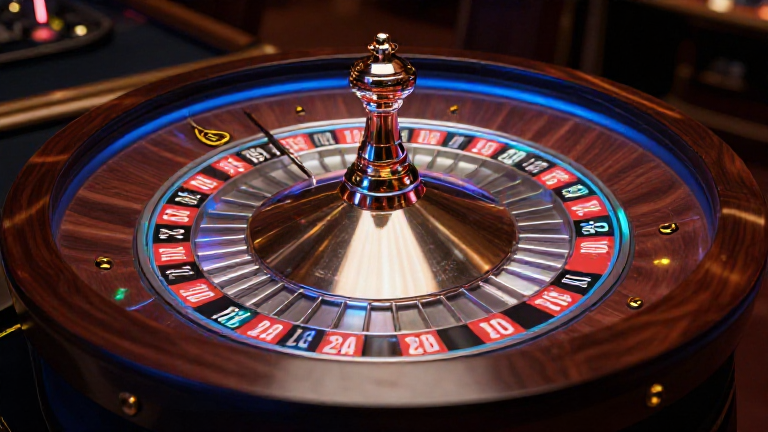
Digital table games have come a long way, and I'm not sure we appreciate it enough
How classic blackjack, roulette, and poker have been rebuilt for crypto casinos with better design, live dealers, and provably fair tech.
Table of Contents
The old versions were barely playable
I started playing online blackjack around 2019, and honestly, the experience was rough. Flat graphics, clunky interfaces, sound effects that belonged in a 2005 Flash game. The actual game logic worked fine, but everything surrounding it felt like an afterthought. You were essentially playing a spreadsheet with a green background.
Fast forward to now and the gap between those early versions and what you find on platforms like Stake is almost hard to believe. Table games went from functional-but-ugly to genuinely immersive. The question I keep coming back to is: what actually drove that change?
Competition forced everyone's hand
The online casino market hit $88 billion globally in 2025. That kind of money attracts serious talent, and serious talent doesn't want to ship mediocre products. Game studios started hiring from the console gaming industry. Animators, sound designers, UX researchers. People who had worked on AAA titles suddenly found themselves redesigning roulette wheels.
But it wasn't just about throwing money at the problem. Crypto casinos specifically pushed the bar higher because they were competing for a younger, more tech-savvy audience. Players who grew up on polished mobile games weren't going to tolerate janky interfaces just because there was real money involved.
Where the real improvements landed
The sensory side of table games improved the most. Dealing animations in blackjack feel weighted now. Cards have texture. Chips stack and scatter with physics that actually make sense. On Stake's poker tables, the interface responds fast enough that you forget you're playing through a browser.
Slots like 20 Super Hot and 40 Super Hot went through similar visual overhauls, adding character animations and dynamic soundtracks. Table games had less room for flashiness, but the subtlety of modern card animations, lighting effects, and camera angles in live dealer rooms makes a bigger difference than most players realize.
Sound design deserves its own mention. Early online table games either had no audio or looped the same jazz track endlessly. Now you get ambient casino noise, chip sounds that vary by stack size, dealer voice lines. Small details, but they add up to something that feels like a real environment rather than a simulation.
Live dealer changed everything
The single biggest leap for digital table games was live streaming. Having an actual human deal cards from a studio somewhere in Eastern Europe or Manila turned an isolated experience into something social. You can chat with the dealer. You can see other players react. It bridges the gap between sitting at your laptop and sitting at a felt table.
I've played live blackjack sessions where the dealer remembered my name from a previous session. That kind of thing doesn't happen with RNG games. It creates loyalty in a way that bonus offers never could.
The production quality of these streams keeps climbing too. Multi-camera setups, professional lighting, dealers trained in entertainment as much as card handling. Some studios run what are essentially TV productions around the clock.
Provably fair adds a layer traditional casinos can't match
Here's where crypto table games pull ahead of their traditional counterparts. Provably fair technology lets you independently verify that a hand wasn't rigged. You can check the cryptographic seed after every round. No traditional casino, online or physical, offers that level of transparency.
Games like 5 Fortune Dragons with its 97.20% RTP and 3x5 Joker: Hold The Spin publish their return rates openly, but provably fair goes further. It's not just a published number you have to trust. It's a mathematical proof you can verify yourself. For anyone who's ever wondered whether the house was cheating, that matters.
What comes next is less clear
VR table games have been "coming soon" for about five years now. I've tried a few prototypes and the technology isn't quite there for long sessions. The headsets are still too heavy, the resolution isn't sharp enough for reading cards comfortably, and the social element feels awkward when everyone is an avatar.
What seems more likely in the near term is continued refinement of what already works. Better mobile experiences, faster live streams, more game variants. You can already compare casinos side by side to see which platforms lead on specific game types, and the differences between the best and the rest keep growing.
If you want to explore what's available across the full range of crypto casinos, the variety of table game implementations alone is worth browsing through. Some platforms are clearly investing more in this space than others, and the ones that treat design as a priority tend to get everything else right too. Check the casino games section for specific titles and their RTPs.

Crypto Gaming DB editorial contributor.
Continue Reading
I've been on tilt more times than I'll admit, here's what actually helps
Practical mental strategies for handling losing streaks in crypto poker and casino games, from bankroll rules to emotional pattern recognition.
Your bankroll management is probably wrong, and it's costing you sessions
Practical crypto casino bankroll management strategies that keep your play sustainable and your budget intact.
Genius Sports vs LSports: what crypto sportsbooks should actually care about
A practical comparison of Genius Sports and LSports data APIs for operators building crypto sports betting platforms.